The Protein Problem: You're Probably Eating Half the Protein You Need
What’s the #1 nutrition mistake holding back adults over 50?
Let’s start with a familiar story…
You're working out, eating well, and doing everything right. BUT still not seeing results.
Well, there’s a strong chance that one change could make a really big difference.
I work with clients over 50, and ONE MISSING HABIT shows up again and again…
Most people over 50 are seriously, and I mean SERIOUSLY under-eating protein.
The good news?
It’s one of the easiest fixes you can make. I know because I lived it.
Why Protein Matters More After 50
Here's what's happening in your body after 50, and why protein becomes so important.
Your muscles stop listening.
As you age, your muscles start to ignore the biological signals that tell them to repair and grow. They also become less efficient at absorbing and using the protein you eat.
Scientists call this anabolic resistance. And it means you need a lot more protein than a 25-year-old just to get the same muscle-building response.
You're losing muscle whether you know it or not.
If you're not fighting back with strength training and protein intake, you can lose 1–2% of your muscle mass per year.
That's sarcopenia, or age-related muscle loss. And most 50-somethings don't notice it happening until the damage is done.
Strength can drop 1.5–5% per year on top of that. Meaning… the math is not in your favor if you're doing nothing.
Your metabolism follows.
Muscle is metabolically active tissue. It burns calories around the clock, not just during exercise.
Less muscle means a slower engine, which is why so many people gain weight in their 50s even when their eating habits haven't changed. It's not just age. It's the muscle you've quietly lost.
Protein keeps hunger in check.
This one is underrated. Protein keeps you fuller longer, reduces cravings, and makes eating less feel manageable rather than miserable.
If you've ever tried to diet and felt like you were white-knuckling it the whole time, low protein is probably why. (Again… this was me!)
How Much Protein Do You Need After 50?
Remember the government's recommended daily allowance for protein?
Yeah, forget it!
Their 0.36g per pound of body weight was set as the minimum to prevent deficiency, not to optimize muscle, metabolism, or body composition. Meaning… it's not nearly enough!
The good news: the government is catching up!
New dietary guidelines issued in January 2026 now recommend 1.2 to 1.6 grams per kilogram of body weight per day, or roughly 0.54 to 0.73 grams per pound.
BUT if you're over 50 and serious about building muscle, many researchers suggest going higher still… in the range of 0.7 to 1 gram per pound of body weight per day.
What does that look like?
150 lbs
→ aim for 105–150g per day
180 lbs
→ aim for 125–180g per day
200 lbs
→ aim for 140–200g per day
If those numbers feel out of reach, start at the lower end and build up.
The Protein Distribution Secret Most People Miss
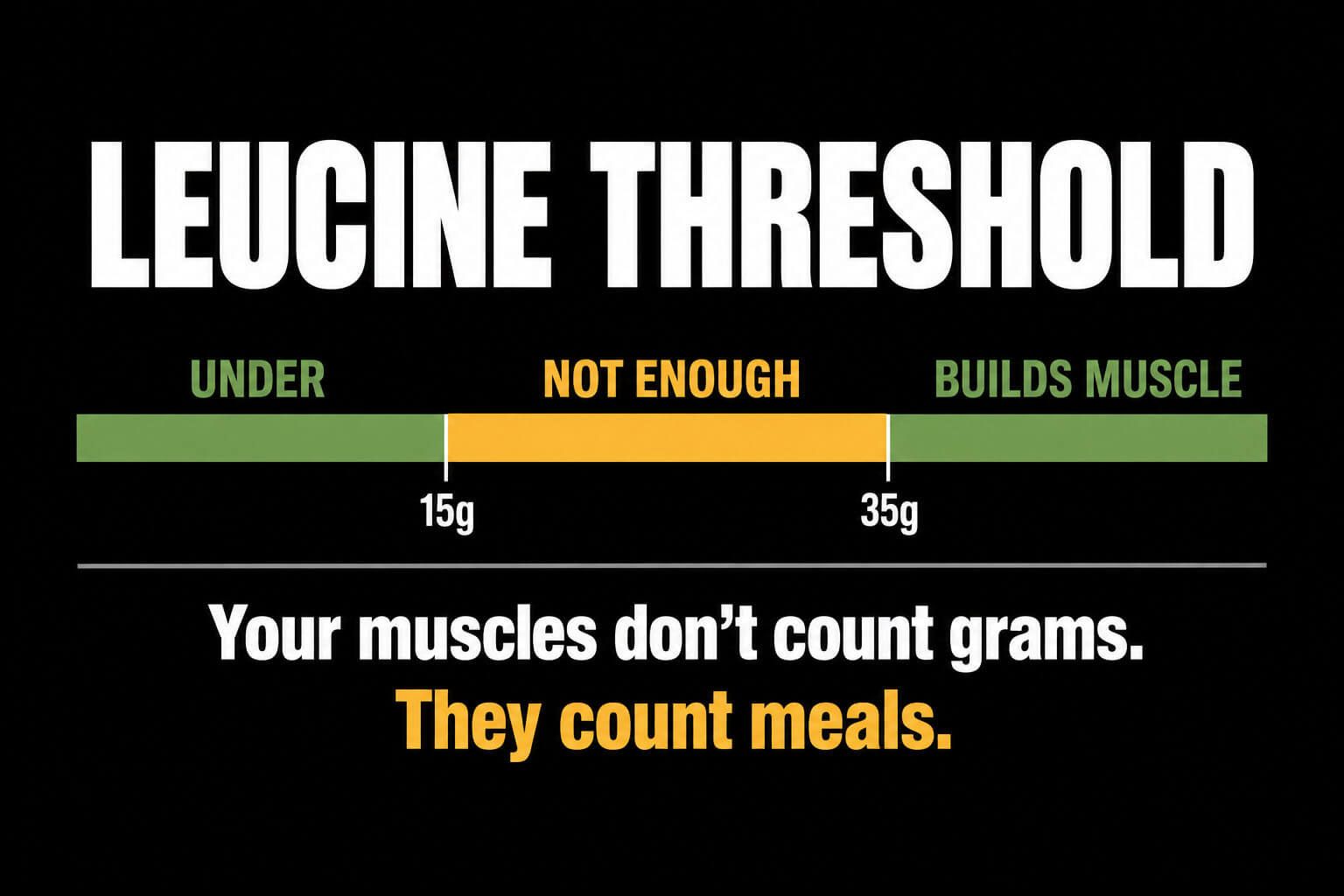
Here's something worth knowing: total daily protein matters more than perfect meal timing.
Your body can absorb and use protein regardless of meal size. SO… don't stress about hitting an exact 30 or 40 grams per meal, or about one meal being bigger than another.
That said, spreading protein across three or four meals is the most practical way to hit your daily target.
The simplest rule: build every meal around protein first. Vegetables, carbs, fats fill in around it.
Think about it! Getting 150g of protein in one or two meals is really hard and not much fun.
Protein with every meal is easier and keeps you consistent.
Here's what this looks like in the real world.
I'm 62, I weigh 185 lbs, and I'm still gaining muscle, and prioritizing protein is a major reason why.
On a typical day, I might have around 60g at breakfast, 55g at lunch, and 65g at dinner. Add a protein bar, and that's another 20g. Not bad, eh? 🙂
Some days it's less, some days more. But 185g is roughly where I land, which lines up with the 1g per pound target for my bodyweight. Not by accident!
Hit Your Protein Target Easily
Here are practical, low-effort ways to increase your daily protein…
High-Protein Foods Worth Knowing by Heart:
- Chicken breast (4 oz): ~35g
- Greek yogurt (1 cup): ~20–25g
- Eggs (2 large): ~12g
- Tuna (1 can): ~25g
- Canned sardines (3 oz): ~21g (cheap, underrated, and loaded with omega-3s)
- Protein powder (1 scoop): ~20–25g
- Black beans (1 cup cooked): ~15g
- Garbanzo beans/chickpeas (1 cup cooked): ~15g
In a typical day, I’ll have almost all of the above.
Easy Protein Upgrades (Swap, Don’t Overhaul)
- Replace cereal or toast with eggs or Greek yogurt + protein powder at breakfast
- Keep rotisserie chicken, canned tuna, or hard-boiled eggs on hand for fast lunches
- Choose cottage cheese or Greek yogurt as snacks instead of crackers or chips
- Build every meal around a protein source first, then add vegetables and carbs
One more thing worth noting is liquid calories. Juice, sweetened coffee drinks, sports drinks, alcohol, massive smoothies… none of them fill you up, and all of them add up fast.
Water, black coffee, and sparkling water are your defaults. Everything else is a choice worth making consciously.
Do You Need Protein Supplements?
No. Whole foods are ideal. But getting 130–180g of protein from whole food can be challenging.
A quality protein supplement can fill the gap without adding excessive calories. One or two scoops per day is plenty. Think of it as a nutritional convenience tool, not a magic muscle formula.
The 3 Most Common Protein Mistakes After 50
Not spreading your protein out across the day. Why? This makes is so much easier to build the “protein habit” and get enough protein!
Assuming you’re eating “enough.” Track your intake for just three days — most people are shocked by how low their numbers are.
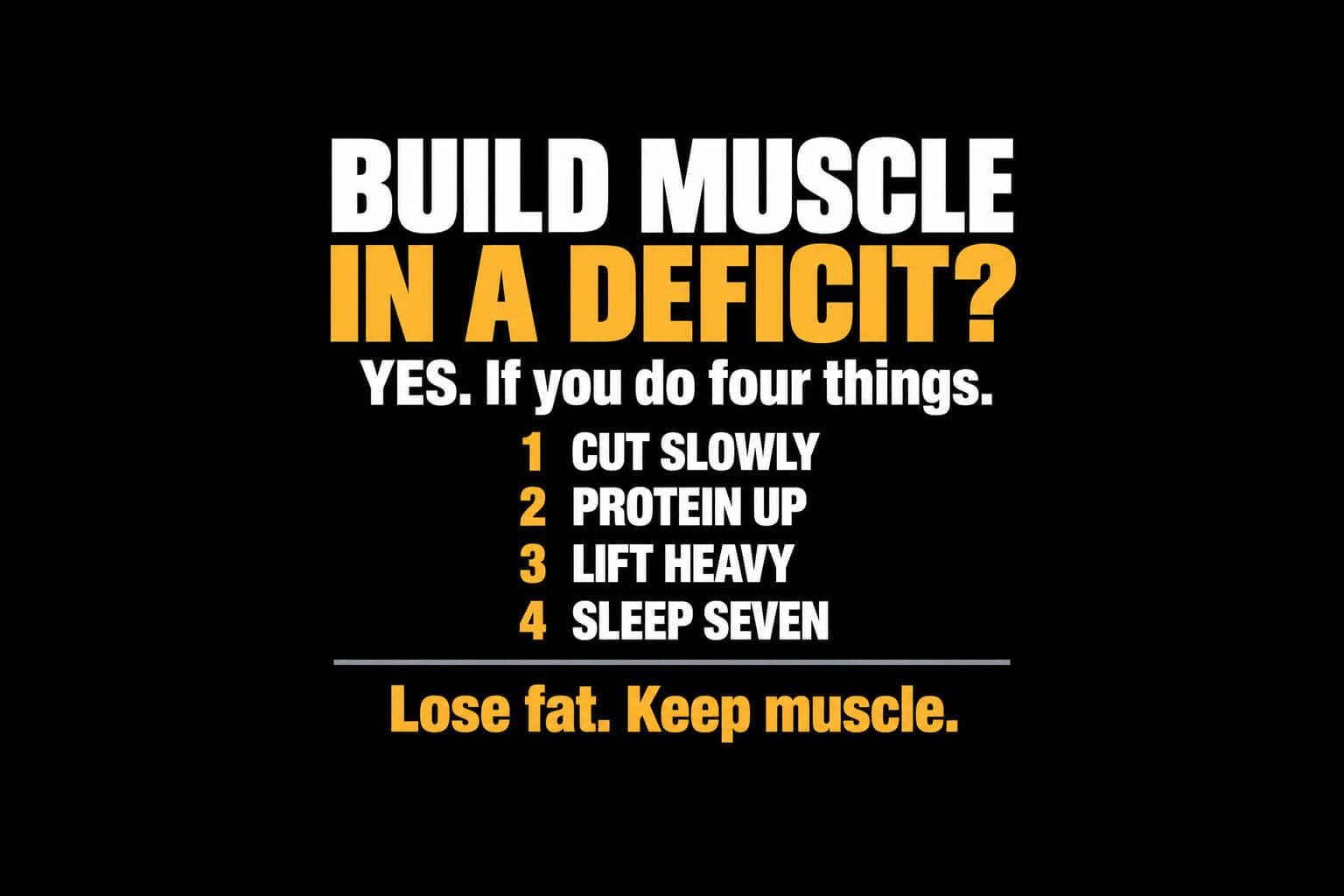
Cutting protein when trying to lose weight. This is exactly backwards. Higher protein during a calorie deficit helps you lose fat while preserving the muscle you worked hard to build.
Grazing all day. Constant snacking keeps insulin elevated, blunts hunger signals, and makes it nearly impossible to know how much you're actually eating. Three solid meals built around protein beats six small ones every time for most men over 50.
Most adults over 50 are eating roughly half the protein they need.
Which means… slower metabolism, difficulty building or keeping muscle, hunger pangs, and sluggish recovery from exercise.
Been there! So done that.
So, what do YOU do?... Build the habit of eating protein-first meals.
Start by tracking your protein for a few days to see where you actually land.
Then pick two or three of the simple swaps above and build from there.
Small, consistent changes add up faster than you’d expect.
Want to See Where You Stand?
Take my free Longevity Assessment and find out exactly where you are right now.
It takes 2 minutes and gives you a personalized score.
Then, I can help build a plan that actually works for your life, schedule, and goals.